Release in July 2026
The Forge release is almost here. As announced in March, Didit Checklists is moving to Atlassian’s Forge platform — and the update will start rolling out shortly. The most important thing to know up front: the app you use every day does not change. Same interface, same features, same data. There is exactly one behavior change worth preparing for — how the checklist panel first appears on Jira work items — and it comes with a simple one-time fix, explained below.
What’s new and improved?
Didit Is Moving to Atlassian Forge COMING SOON
With the upcoming release, Didit Checklists (for both Jira and Confluence) runs on Atlassian’s Forge platform, Atlassian’s current-generation foundation for cloud apps. During the transition, one and the same app fully supports both the existing Connect platform and Forge, so it does not matter which side of the rollout your site is on at any given moment.
- No new interface: The Didit hub, checklists, templates, macros, and custom fields look and behave exactly as they do today — with the single exception of the Jira work-item panel described below.
- No data migration: Checklists, templates, permissions, and global settings carry over untouched. Public links, the mobile apps, and the Didit API keep working as before.
- A future-proof foundation: Forge is where Atlassian is investing for cloud apps, and this move is what enables everything we ship next.
Keep Checklists Visible on Jira Work Items ACTION
This is the one visible difference the platform brings, and the one thing we recommend an admin does right after the update.
On the Connect platform, the Didit checklist panel renders automatically, fully expanded, the moment a work item finishes loading. On Forge, Jira handles app panels differently: they are on-demand. Out of the box, the Didit panel only appears after someone reveals it via the Apps button on the work item.
The saving grace is Jira’s new “Show for all work items” option, which restores the always-visible behavior in three clicks:
-
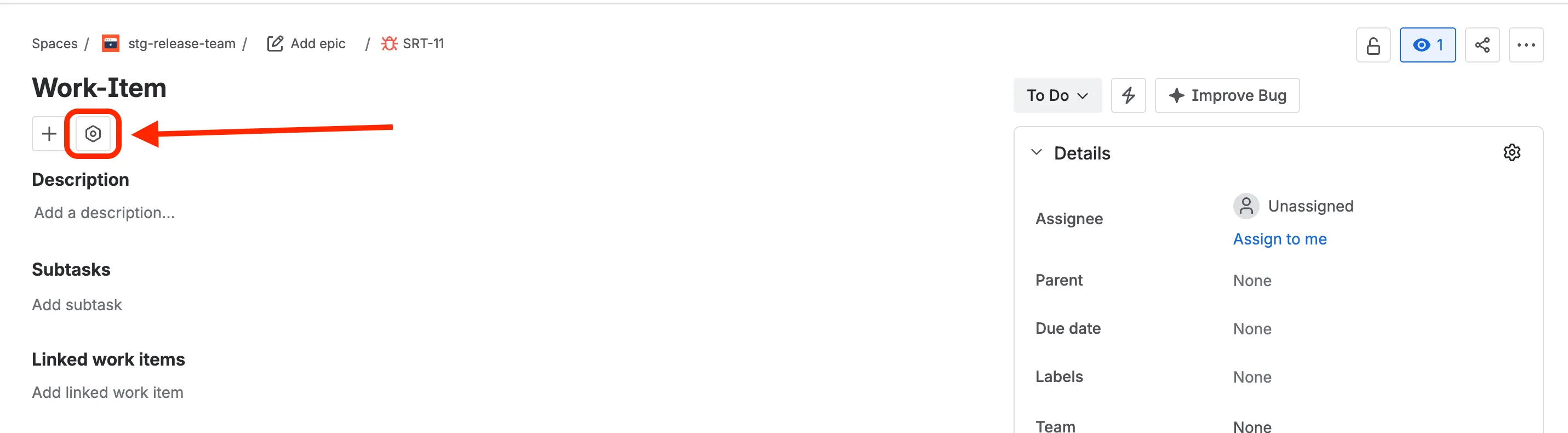
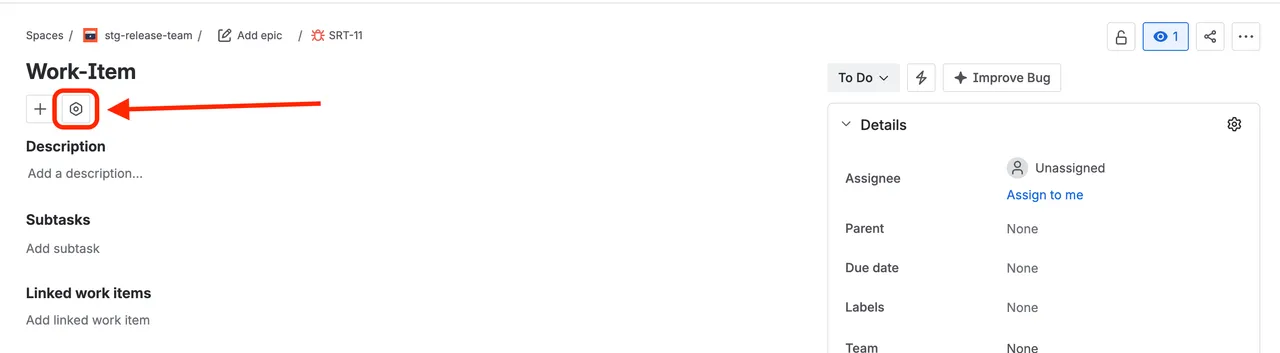
Open any work item and click the Apps button (the hexagon icon next to ”+”, below the work item title).
-
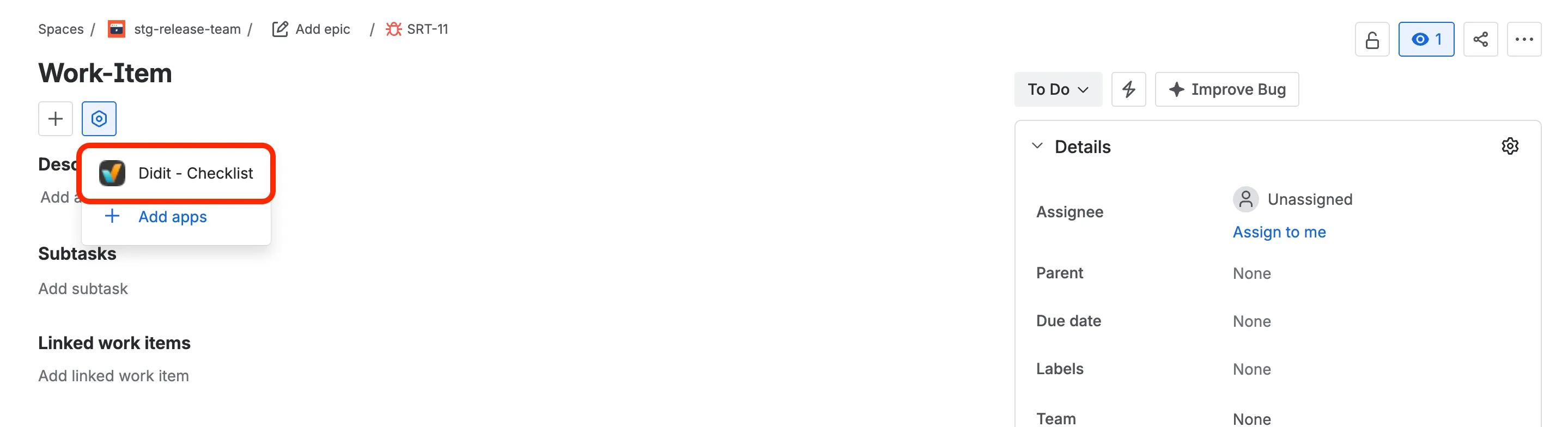
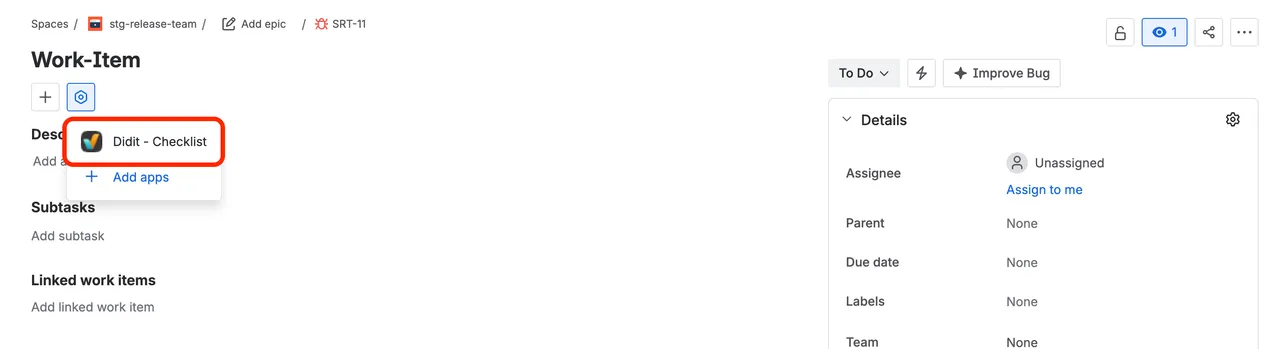
Select Didit - Checklist to reveal the checklist panel.
-
In the panel, open the ⋯ menu in the top-right corner and click Show for all work items.
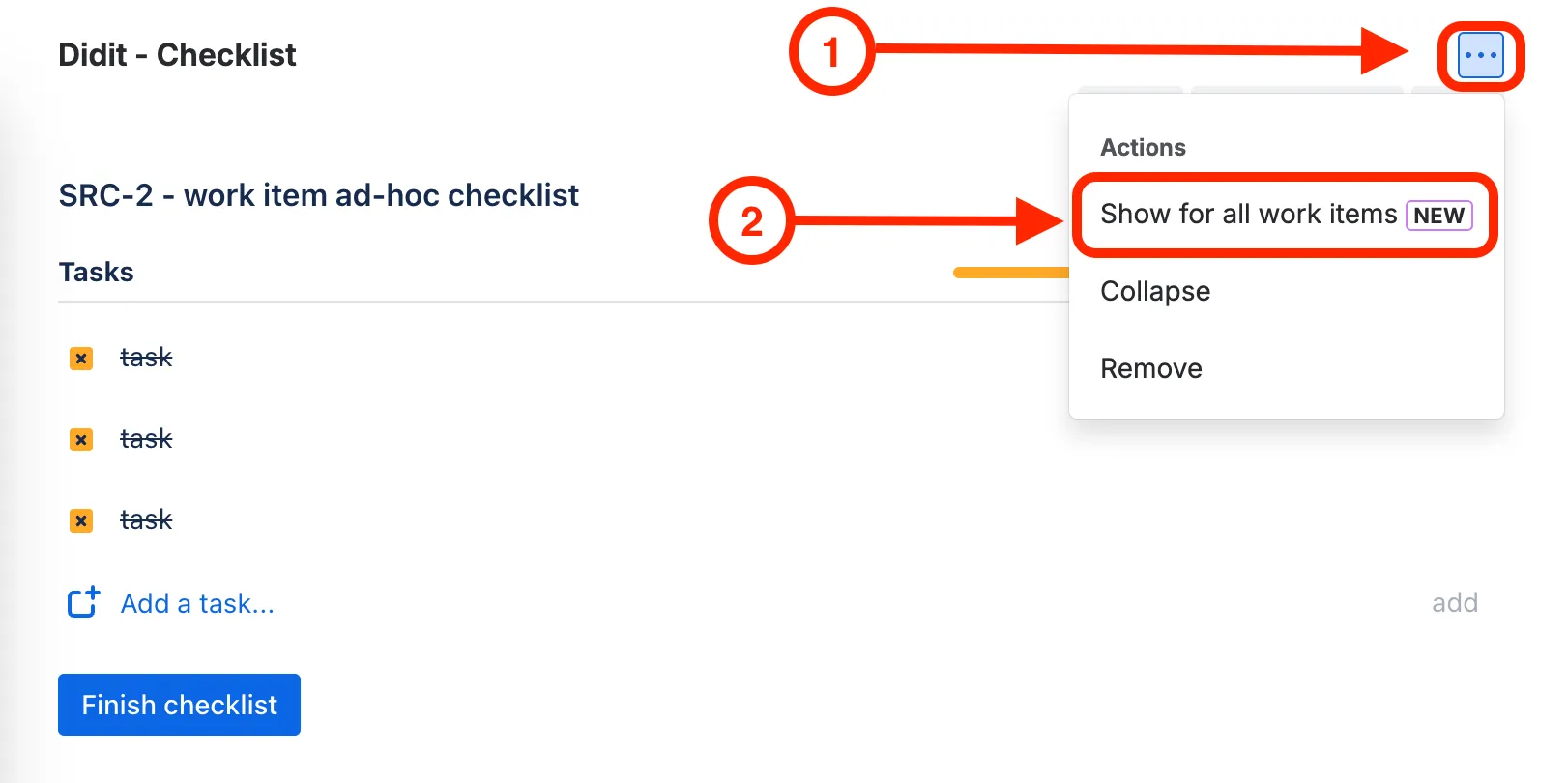
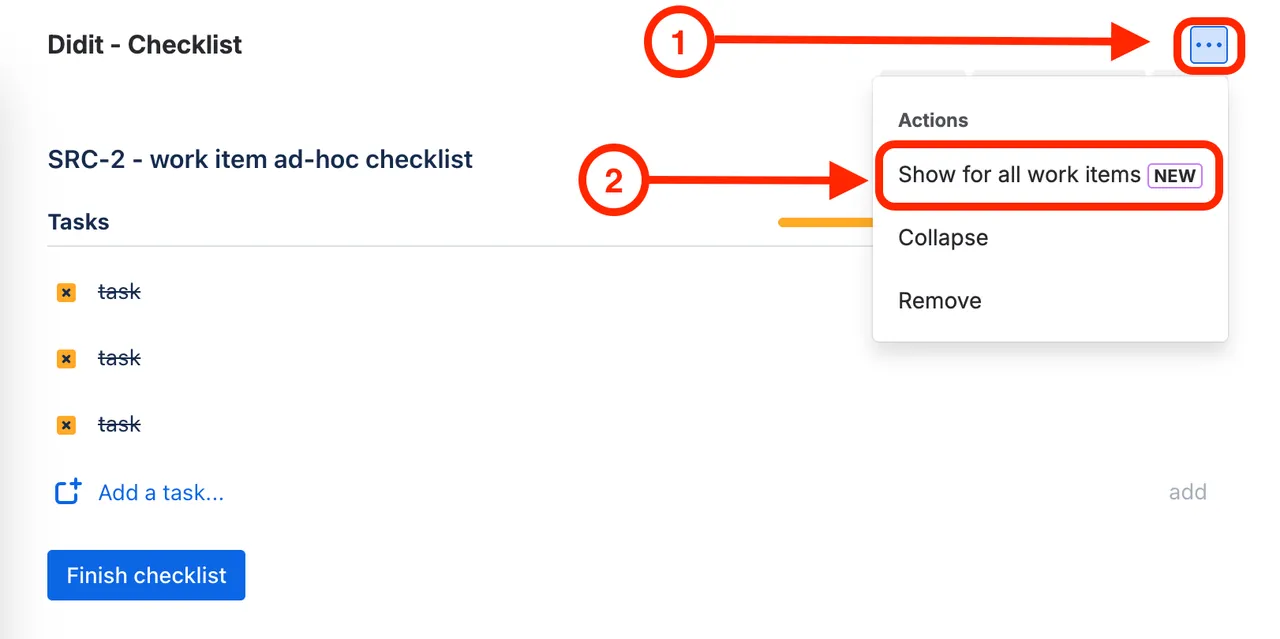
That’s it — from then on, the Didit checklist panel appears automatically on work items again, just like you’re used to.
The Update Itself GOOD TO KNOW
For everyday Didit users the update itself is a non-event — the only thing they may notice is a one-time “Allow access” prompt, explained below. For Jira and Confluence admins:
-
Watch for the update in “Manage apps”: The Forge version arrives as a regular app update in your Jira and Confluence administration. If your site has app auto-updates enabled, you may not need to lift a finger.
-
Approve the new permissions if prompted: Forge makes every permission an app uses explicit. You may therefore be asked to review and accept the app’s permissions when the update arrives — this reflects the platform’s stricter permission model, not a change in what Didit actually does with your data. Until an admin accepts, the current version simply keeps running.
-
Let your teams know about the one-time “Allow access” prompt: Separately from the admin approval above, Forge also asks each user for consent. The first time Didit tries to display for a user after the update, they may see a banner saying “For Didit - Checklists to display, you need to grant it access to Atlassian apps on your behalf.” One click on Allow access and Didit renders as usual — each person only sees this once.


-
Update both apps: If you use Didit in Jira and Confluence, the update applies to each app separately — approve it in both places.
-
No reconfiguration, no re-training: Beyond the one-time “Show for all work items” click above, there is nothing to prepare or communicate to your teams.
If you have compliance questions about the platform move, want to coordinate the timing for your site, or anything looks off after the update, our support team is happy to help.